GBPUSD Crushed above 1.5700 as Sellers Remain in Control
Aayush Jindal
Key Highlights
British Pound failed to settle above 1.5700-1.5800 area and declined heavily against the US Dollar.
Many important support levels were cleared and it looks set for more losses in the near term.
In Japan, Securities investment, which referrers to bonds issued in a domestic market by a foreign entity in the domestic market’s currency released by Ministry of Finance came in at ¥-273.8.
Australian Private Capital Expenditure released by the Australian Bureau of Statistics declined by 4% in the second quarter of 2015, more than the forecast of -2.5%.
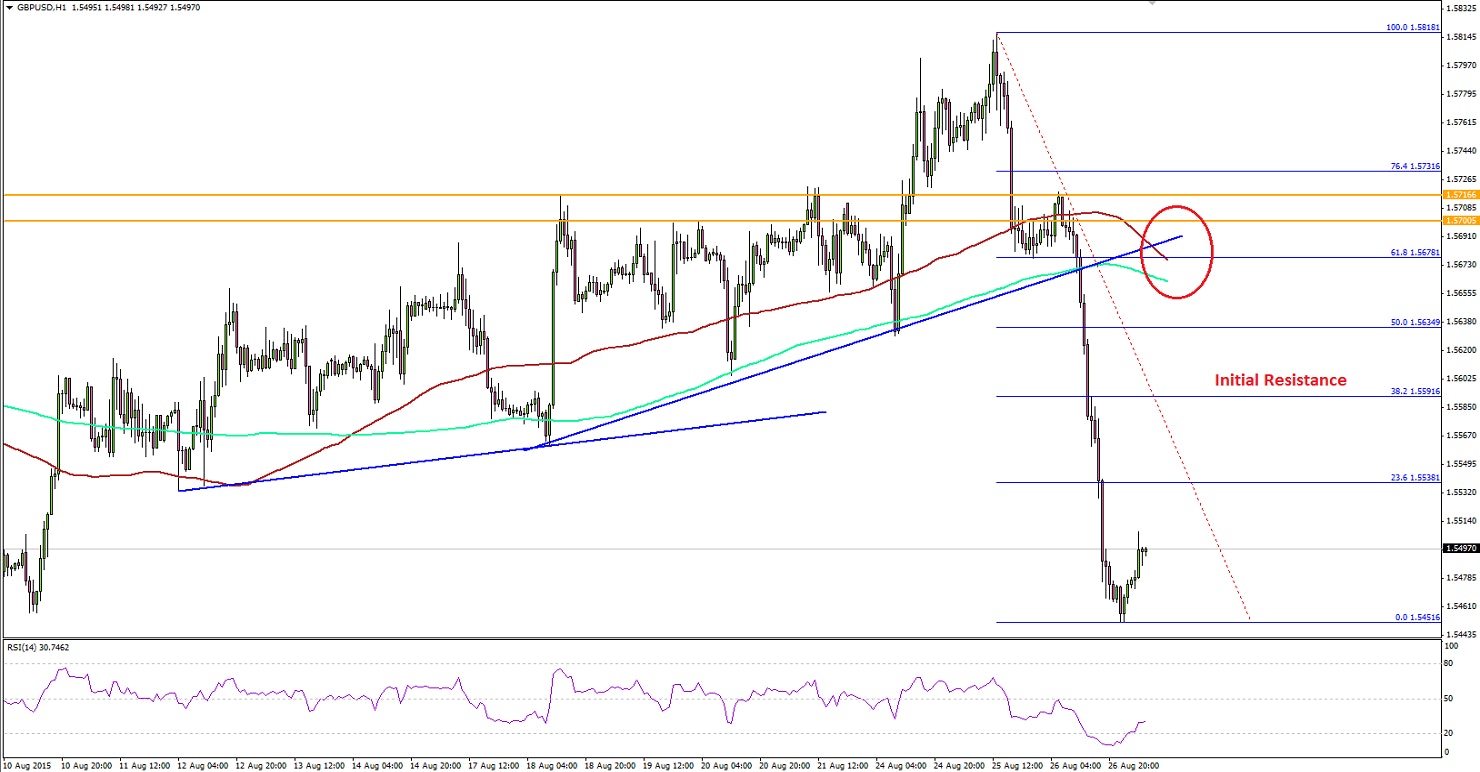
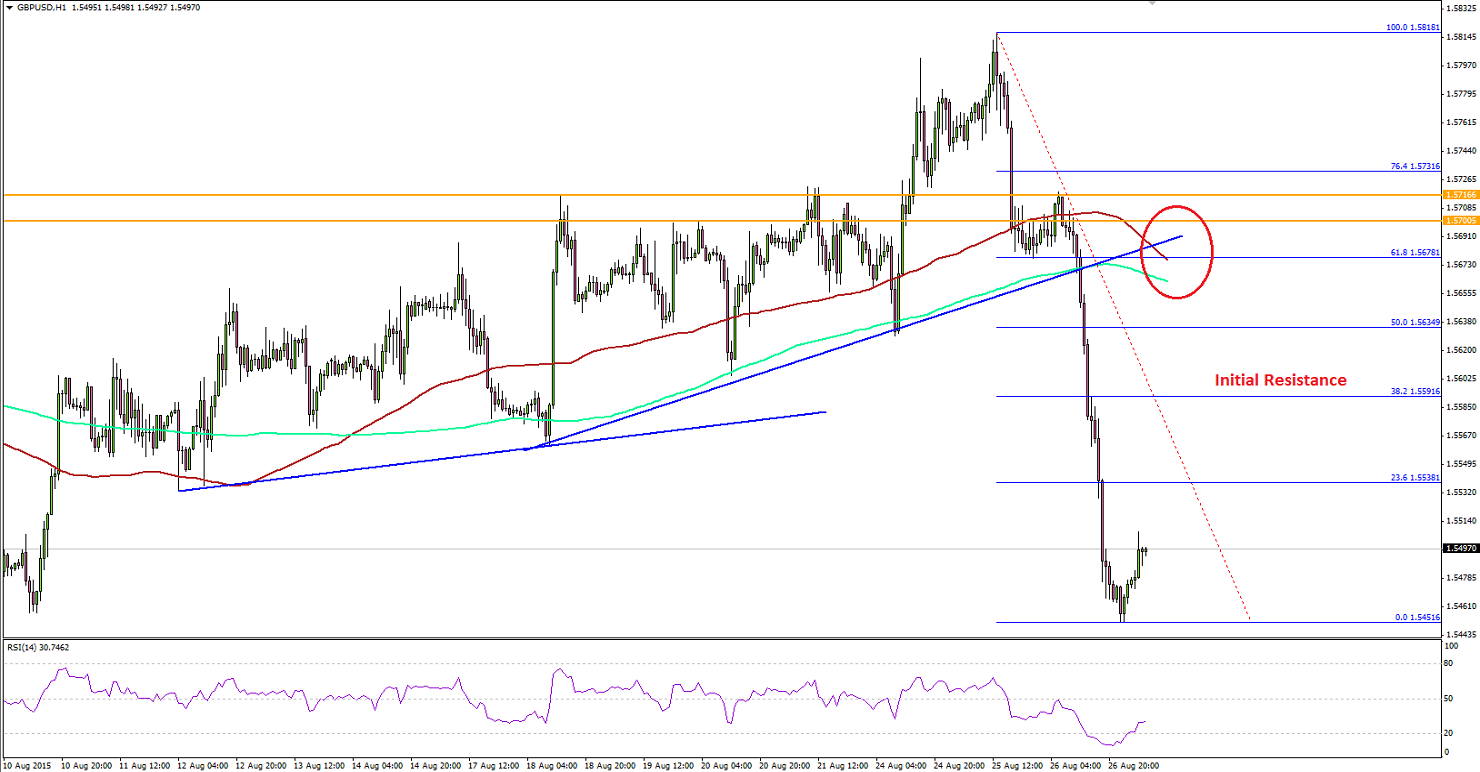
GBPUSD Technical AnalysisThe British Pound enjoyed a decent run this past week against the US Dollar, as it traded above a critical resistance area of 1.5700. However, the GBPUSD pair failed to hold gains and started a reversal. The downside move was very strong, as the pair cleared a couple of important bullish trend lines on the hourly chart to set the pace for more losses.A crucial thing is that the pair has now settled below the 100 and 200 hourly simple moving averages. The GBPUSD pair traded as low as 1.5450 where it found buyers for an upside reaction.If the pair continues to trade higher from the current levels, then an initial resistance might be around the 38.2% Fib retracement level of the last drop from the 1.5818 high to 1.5451 low. The most important hurdle is around the 100 SMA, coinciding with the trend line and 61.8% Fib level.Australian Private Capital ExpenditureEarlier during the Asian session, the Private Capital Expenditure, which measures current and future capital expenditure intentions of the private sector and an indicator for inflationary pressures was released by the Australian Bureau of Statistics. The forecast was lined up for a decline of 2.5% in the second quarter pf 2015. However, the outcome was lower compared with the forecast, as Private Capital Expenditure fell by 4%.The report stated that the “trend volume estimate for buildings and structures fell 5.3% in the June quarter 2015 while the seasonally adjusted estimate fell 5.6%”Overall, there was nothing to cheer for the Aussie Dollar buyers, which resulted in a minor downside reaction in the AUDUSD pair.

 A crucial thing is that the pair has now settled below the 100 and 200 hourly simple moving averages. The GBPUSD pair traded as low as 1.5450 where it found buyers for an upside reaction.If the pair continues to trade higher from the current levels, then an initial resistance might be around the 38.2% Fib retracement level of the last drop from the 1.5818 high to 1.5451 low. The most important hurdle is around the 100 SMA, coinciding with the trend line and 61.8% Fib level.Australian Private Capital ExpenditureEarlier during the Asian session, the Private Capital Expenditure, which measures current and future capital expenditure intentions of the private sector and an indicator for inflationary pressures was released by the Australian Bureau of Statistics. The forecast was lined up for a decline of 2.5% in the second quarter pf 2015. However, the outcome was lower compared with the forecast, as Private Capital Expenditure fell by 4%.The report stated that the “trend volume estimate for buildings and structures fell 5.3% in the June quarter 2015 while the seasonally adjusted estimate fell 5.6%”Overall, there was nothing to cheer for the Aussie Dollar buyers, which resulted in a minor downside reaction in the AUDUSD pair.
 A crucial thing is that the pair has now settled below the 100 and 200 hourly simple moving averages. The GBPUSD pair traded as low as 1.5450 where it found buyers for an upside reaction.If the pair continues to trade higher from the current levels, then an initial resistance might be around the 38.2% Fib retracement level of the last drop from the 1.5818 high to 1.5451 low. The most important hurdle is around the 100 SMA, coinciding with the trend line and 61.8% Fib level.Australian Private Capital ExpenditureEarlier during the Asian session, the Private Capital Expenditure, which measures current and future capital expenditure intentions of the private sector and an indicator for inflationary pressures was released by the Australian Bureau of Statistics. The forecast was lined up for a decline of 2.5% in the second quarter pf 2015. However, the outcome was lower compared with the forecast, as Private Capital Expenditure fell by 4%.The report stated that the “trend volume estimate for buildings and structures fell 5.3% in the June quarter 2015 while the seasonally adjusted estimate fell 5.6%”Overall, there was nothing to cheer for the Aussie Dollar buyers, which resulted in a minor downside reaction in the AUDUSD pair.