USDJPY – Dollar To Yen Faces A Crucial Resistance Near 115.00
Aayush Jindal
Key Highlights
The US Dollar remained under heavy bearish pressure vs the Japanese yen and moved below 115.00.
There are many resistances on the upside, including a bearish trend line at 115.20 on the 4-hours chart of USDJPY.
The US Consumer Price Index released by the US Bureau of Labor Statistics recently posted an increase of +0.3% in Dec 2016, compared with the forecast of +0.3%.
The Australian Employment Change released by the Australian Bureau of Statistics posted a change of 13.5K in Dec 2016.
USDJPY Technical Analysis
The US Dollar faced a lot of selling pressure recently, and moved below 115.00 against the Japanese yen. The USDJPY looks like well in the bearish zone, and may trade lower in the short term.The pair recently extended the downside move, and broke the 100 and 200 simple moving average plus a major support at 115.00 on the 4-hours chart. It opened the doors for a sharp downside move, taking the pair towards 112.50.Later, the pair started a recovery, but likely to face sellers near the 76.4% Fib retracement level of the last decline from the 115.44 high to 112.87 low. Moreover, there is a bearish trend line on the same chart, waiting to act as a hurdle near 115.00-115.20.
US CPI
The US saw the Consumer Price Index release by the US Bureau of Labor Statistics yesterday. The market was expecting a 0.3% rise in the CPI in Dec 2016, compared with Nov 2016. The result was as expected, as there was a rise of 0.3% in the CPI.In terms of the yearly change, the US CPI was forecasted to increase by 2.1, and again the outcome was as expected. The US Dollar faced selling interest after the release, prompting a recovery in USDJPY towards 115.00.
Australian Employment Change
In Australia today, there was a major release as the employment report was published. The Australian Employment Change was forecasted to change by 10K in Dec 2016. However, the result was above the forecast, as the change was 13.5K, but the unemployment rate increased from 5.7% to 5.8%.The Aussie dollar was seen trading lower after the release, and may remain under a minor bearish pressure.

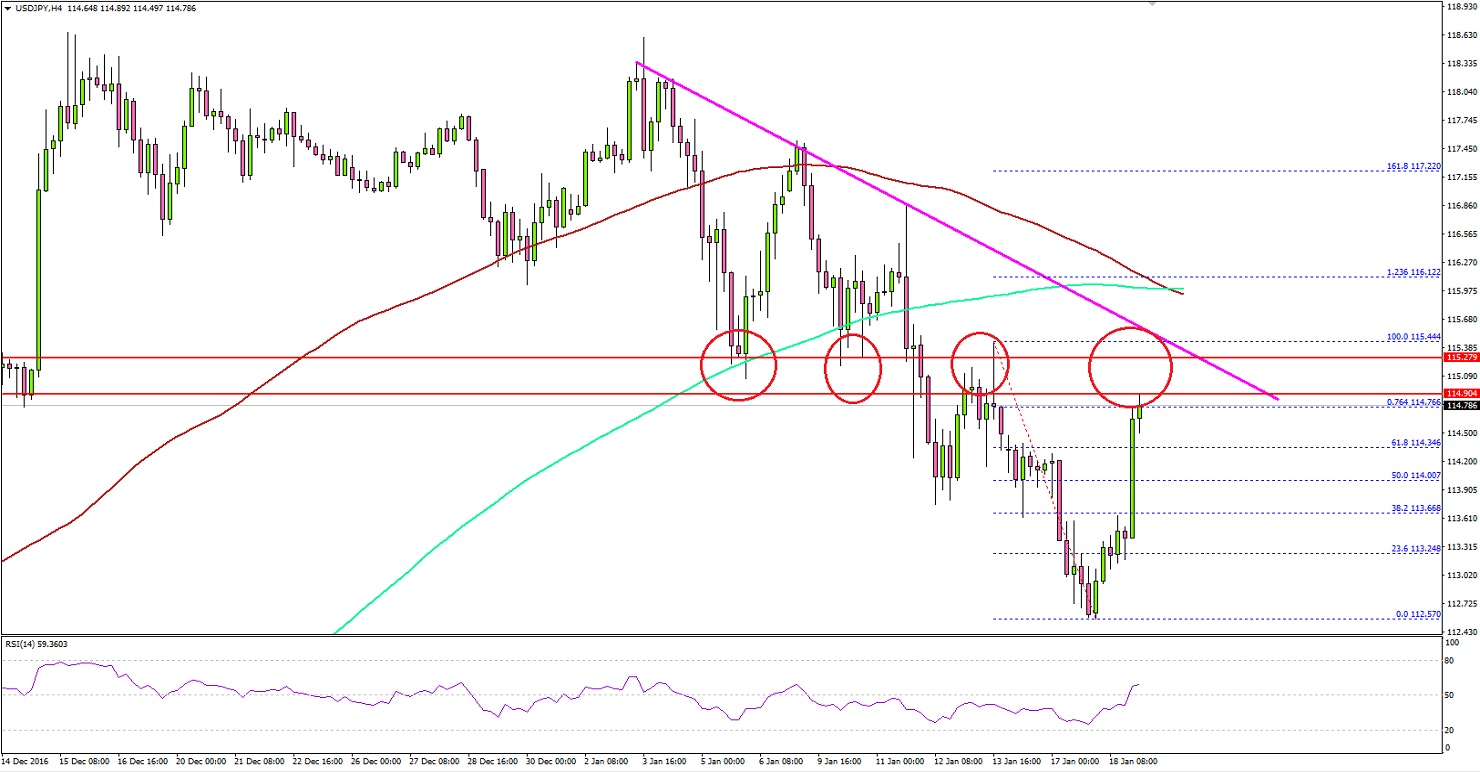 The pair recently extended the downside move, and broke the 100 and 200 simple moving average plus a major support at 115.00 on the 4-hours chart. It opened the doors for a sharp downside move, taking the pair towards 112.50.Later, the pair started a recovery, but likely to face sellers near the 76.4% Fib retracement level of the last decline from the 115.44 high to 112.87 low. Moreover, there is a bearish trend line on the same chart, waiting to act as a hurdle near 115.00-115.20.
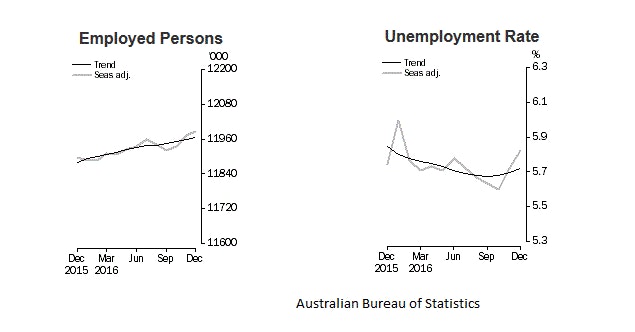 The Aussie dollar was seen trading lower after the release, and may remain under a minor bearish pressure.