Euro after trading close to the 1.1150 support area managed to gain bids against the US Dollar.
EURUSD pair is currently trading higher and positioned around a major breakout area.
In Japan, the Industrial Production released by the Ministry of Economy, Trade and Industry posted a decrease of 0.6% in July 2015, less than the forecast of a 0.1% rise.
In Australia, the HIA New Home Sales released by the Housing Industry Association registered a decrease of 0.4% in July 2015, less than the last rise of 0.5%.
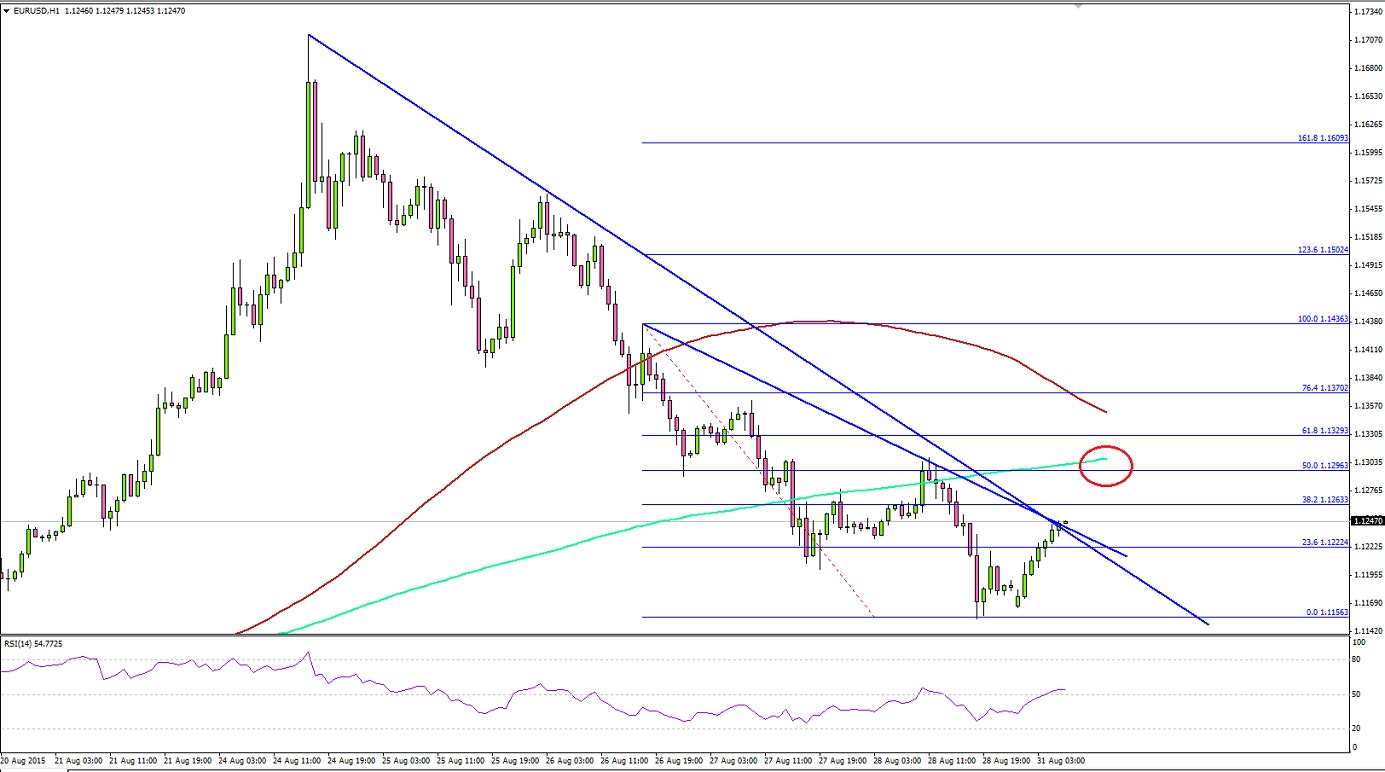
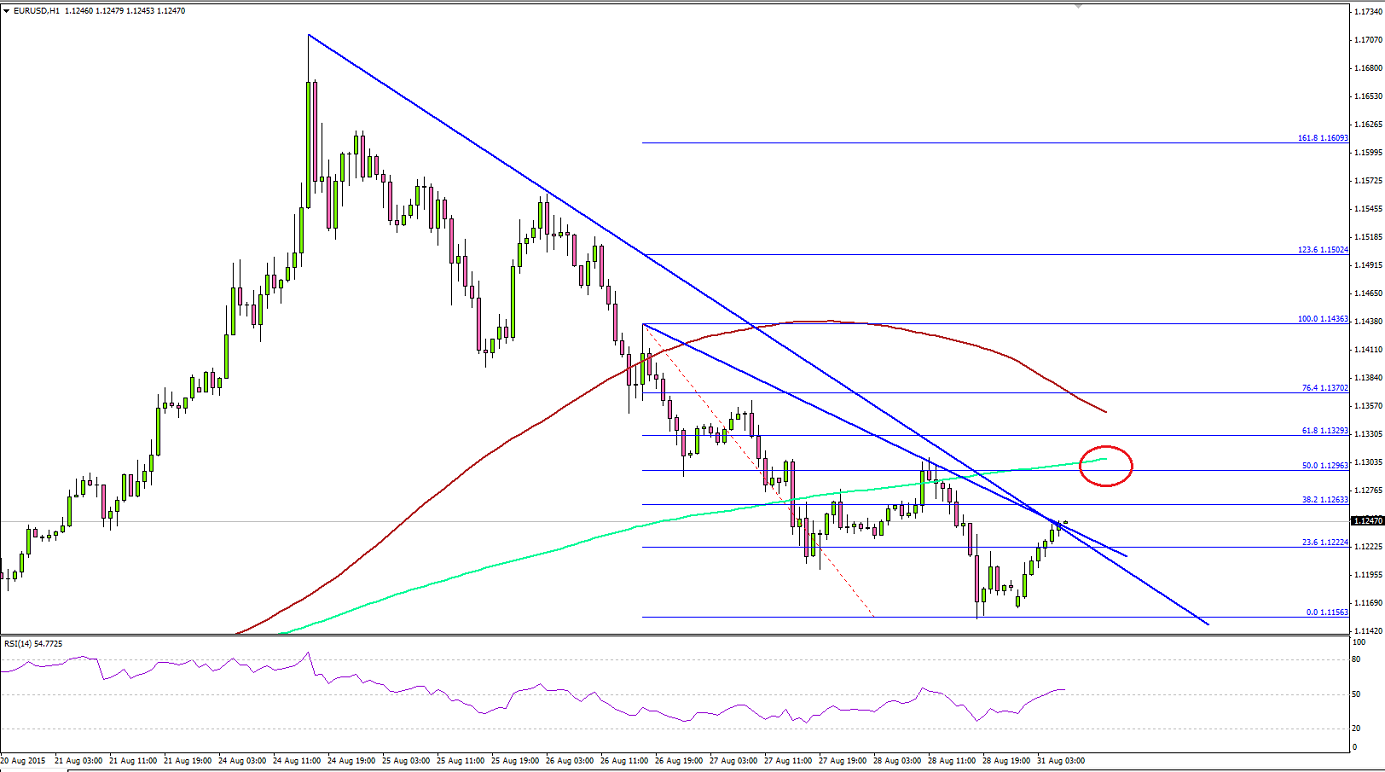
EURUSD Technical AnalysisThe Euro traded lower this past week against the US Dollar to trade near 1.1150 where buyers appeared for an upside reaction. There are a couple of important bearish trend lines formed on the hourly chart, which are positioned around the current trading levels. It means the EURUSD pair is trading near an important resistance area.If buyers manage to clear the 1.1250 resistance area more gains are likely in the near term. The next level of interest is seen around the 50% Fib retracement level of the last drop from the 1.1436 high to 1.1156 low. The most important point is that the mentioned Fib level is positioned with the 200 hourly simple moving average. So, sellers might take a stand around the 1.1300 area if the pair reaches there.On the downside, the 1.1200 area may act as a support moving ahead. A break below it could take the EURUSD pair back towards the last swing low of 1.1156.Japanese Industrial ProductionEarlier during the Asian session, the Japanese Industrial Production, which measures outputs of the Japanese factories and mines was released by the Ministry of Economy, Trade and Industry. The market was expecting a rise of 0.1% in July 2015, compared with the preceding month. However, the outcome was lower compared with the expectation, as the Japanese Industrial Production registered a decrease of 0.6% in July 2015.In terms of the yearly change, there was an increase of 0.2% in July 2015, compared with the same month a year ago. It was also disappointing, as the last rise was 2.3%. Overall, there was nothing to cheer for the Yen buyers.

 If buyers manage to clear the 1.1250 resistance area more gains are likely in the near term. The next level of interest is seen around the 50% Fib retracement level of the last drop from the 1.1436 high to 1.1156 low. The most important point is that the mentioned Fib level is positioned with the 200 hourly simple moving average. So, sellers might take a stand around the 1.1300 area if the pair reaches there.On the downside, the 1.1200 area may act as a support moving ahead. A break below it could take the EURUSD pair back towards the last swing low of 1.1156.Japanese Industrial ProductionEarlier during the Asian session, the Japanese Industrial Production, which measures outputs of the Japanese factories and mines was released by the Ministry of Economy, Trade and Industry. The market was expecting a rise of 0.1% in July 2015, compared with the preceding month. However, the outcome was lower compared with the expectation, as the Japanese Industrial Production registered a decrease of 0.6% in July 2015.In terms of the yearly change, there was an increase of 0.2% in July 2015, compared with the same month a year ago. It was also disappointing, as the last rise was 2.3%. Overall, there was nothing to cheer for the Yen buyers.
 If buyers manage to clear the 1.1250 resistance area more gains are likely in the near term. The next level of interest is seen around the 50% Fib retracement level of the last drop from the 1.1436 high to 1.1156 low. The most important point is that the mentioned Fib level is positioned with the 200 hourly simple moving average. So, sellers might take a stand around the 1.1300 area if the pair reaches there.On the downside, the 1.1200 area may act as a support moving ahead. A break below it could take the EURUSD pair back towards the last swing low of 1.1156.Japanese Industrial ProductionEarlier during the Asian session, the Japanese Industrial Production, which measures outputs of the Japanese factories and mines was released by the Ministry of Economy, Trade and Industry. The market was expecting a rise of 0.1% in July 2015, compared with the preceding month. However, the outcome was lower compared with the expectation, as the Japanese Industrial Production registered a decrease of 0.6% in July 2015.In terms of the yearly change, there was an increase of 0.2% in July 2015, compared with the same month a year ago. It was also disappointing, as the last rise was 2.3%. Overall, there was nothing to cheer for the Yen buyers.